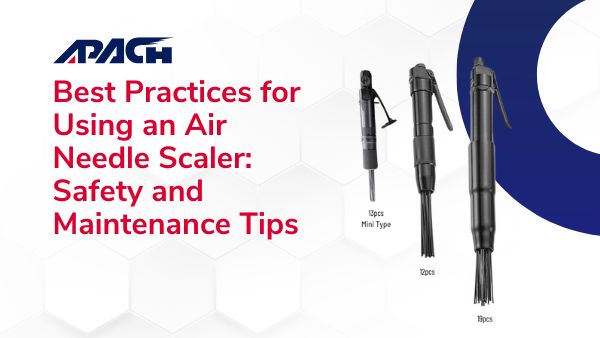
Best Practices for Using an Air Needle Scaler: Safety and Maintenance Tips
Air needle scalers are powerful pneumatic tools used for removing rust, paint, slag, and other surface contaminants from metal surfaces. These tools are indispensable in industries such as shipbuilding, construction, automotive repair, and heavy machinery maintenance. However, to ensure both effectiveness and safety, it’s essential to understand how to properly operate and maintain your air needle scaler.
At Apach, a trusted Taiwanese manufacturer of pneumatic tools, we design and produce reliable, high-performance air needle scalers that meet the demanding requirements of professionals. In this article, we’ll share best practices for using air needle scalers—covering everything from safety precautions to maintenance tips—to help you get the most out of your tool.
What Is an Air Needle Scaler?
An air needle scaler (also known as a pneumatic needle scaler) is a tool that uses compressed air to drive multiple steel needles back and forth against a surface. The rapid movement of the needles chips away rust, paint, scale, and hardened debris. This makes the tool ideal for prepping metal surfaces before welding, repainting, or coating.
Safety Tips When Using an Air Needle Scaler
Safety is crucial when working with air needle scalers. These tools can be loud and produce flying debris, so proper precautions should be taken to protect yourself and others.
1. Wear Appropriate Personal Protective Equipment (PPE)
-
Eye protection: Always wear safety goggles or a face shield to protect against flying particles.
-
Hearing protection: Needle scalers are noisy, often exceeding 100 dB. Use earplugs or earmuffs.
-
Gloves: Anti-vibration or cut-resistant gloves protect your hands from vibration and sharp debris.
-
Dust mask or respirator: If working on lead-based paint or rust, a mask is essential to prevent inhalation of harmful particles.
2. Inspect the Tool Before Each Use
-
Check that all parts are secure and undamaged.
-
Make sure the needles are straight and not worn down.
-
Test the air connection to ensure there are no leaks.
3. Use Proper Air Pressure
-
Consult the manufacturer’s specifications for the correct operating pressure (usually between 90–100 PSI).
-
Too much pressure can damage the tool and reduce control, while too little will affect performance.
4. Maintain a Firm Grip and Stable Stance
-
Hold the tool firmly with both hands to maintain control.
-
Keep your body balanced and avoid awkward positions that may lead to loss of control.
5. Avoid Pointing the Tool at Others
-
Treat the scaler like any other power tool: never point it at yourself or coworkers.
-
Disconnect the air supply before making adjustments or changing needles.
Learn More:
How to use air needle scalers Efficienly and safely.
Maintenance Tips for Long-Lasting Performance
Routine maintenance is the key to keeping your air needle scaler in peak condition. Regular upkeep helps extend tool life, maintain efficiency, and reduce the risk of breakdowns.
1. Lubricate Regularly
-
Add a few drops of pneumatic tool oil into the air inlet before each use.
-
This reduces internal friction, prevents rust, and ensures smooth operation.
-
Use only air tool-specific lubricants.
2. Clean After Each Use
-
Wipe down the exterior of the scaler to remove dust, paint chips, or metal fragments.
-
Use compressed air to blow out debris from hard-to-reach areas.
3. Inspect and Replace Needles
-
Needles wear down over time, becoming less effective or even dangerous.
-
Replace bent or shortened needles with new ones—preferably in full sets to maintain balance.
4. Check for Air Leaks
-
Periodically inspect air hoses and connectors for cracks or leaks.
-
Replace worn components immediately to maintain consistent air pressure and avoid energy waste.
5. Store the Tool Properly
-
Keep the scaler in a dry, dust-free environment to prevent rust and contamination.
-
Use a protective case or toolbox to avoid accidental damage during transport or storage.
Bonus Tip: Match the Right Tool to the Job
Not all air needle scalers are built the same. Depending on your application, you may need a heavy-duty model for industrial use or a lightweight scaler for more detailed work.
Apach offers a range of air needle scalers with various configurations to suit different needs:
-
Standard-duty models for general rust or paint removal.
-
Heavy-duty models for shipyards, oil tanks, and construction equipment.
-
Low-vibration designs for long-term use and user comfort.
Air Needle Scaler Safety and Maintenance Quick Reference
| Category | Best Practice | Why It Matters |
|---|---|---|
| Personal Protective Equipment (PPE) | Wear safety goggles or a face shield | Protects eyes from flying rust, paint chips, and debris |
| Hearing Protection | Use earplugs or earmuffs | Needle scalers often exceed 100 dB during operation |
| Hand Protection | Wear anti-vibration or cut-resistant gloves | Reduces vibration fatigue and protects against sharp particles |
| Respiratory Protection | Use a dust mask or respirator | Prevents inhalation of rust, dust, and hazardous coatings |
| Tool Inspection | Check needles, fittings, and connections before use | Helps prevent accidents and equipment failure |
| Air Pressure Control | Maintain recommended pressure (90 PSI) | Ensures safe operation and optimal cleaning performance |
| Stable Handling | Hold the scaler firmly with both hands | Improves control and reduces risk of injury |
| Safe Operation | Never point the tool at people | Prevents accidental injury from high-speed needle movement |
| Tool Maintenance | Lubricate before each use | Extends tool lifespan and reduces internal wear |
| Storage | Store in a dry, clean environment | Prevents corrosion and contamination |
Conclusion: Get the Best Out of Your Air Needle Scaler
Using an air needle scaler properly involves more than just turning on the air supply. By following safety best practices and performing regular maintenance, you’ll ensure maximum tool performance, reduce downtime, and keep yourself safe on the job.
Whether you're a professional in metal fabrication, ship maintenance, or automotive repair, Apach's air needle scalers are built to meet your expectations. With proper care, these tools will be a reliable part of your equipment arsenal for years to come.
FAQs
1. What air pressure should I use for an air needle scaler?
Most air needle scalers operate best at 90–100 PSI. Using too much pressure can damage the tool, while too little reduces cleaning efficiency.
2. How do I maintain an air needle scaler?
Regular maintenance includes:
• Lubricating with pneumatic tool oil before use
• Cleaning after each operation
• Inspecting and replacing worn needles
• Checking air hoses for leaks
• Storing in a dry environment
3. How often should I replace the needles?
Needles should be replaced whenever they become bent, shortened, or uneven. In heavy-duty use, regular inspection after each job is recommended.
4. How do I know if my air needle scaler has an air leak?
Common signs include reduced power, inconsistent operation, or audible hissing sounds from hoses or connectors. Regular inspection helps prevent this issue.
Looking for the right air needle scaler?
Contact Apach today to learn more about our range of pneumatic surface preparation tools—and experience the performance and durability that professionals around the world trust.