How to Choose the Right Pneumatic Stapler for Your Project
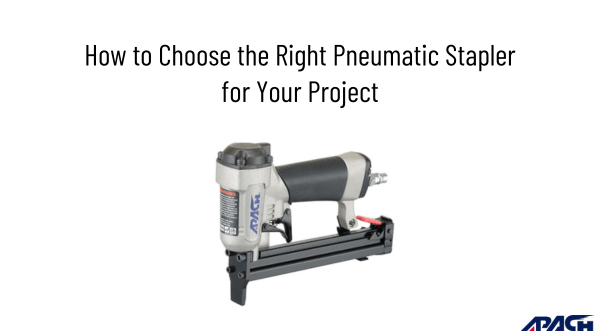
A pneumatic stapler is an essential tool for fastening materials in woodworking, upholstery, construction, and industrial applications. However, selecting the right staple crown size—whether narrow crown, medium crown, wide crown (light duty), or wide crown (heavy duty)—is crucial to achieving the best results for your specific task.
At Apach, we offer a range of pneumatic staplers to meet different project demands. This guide will help you understand the differences and choose the right stapler for your needs.
________________________________________
1. Understanding Staple Crown Sizes
The crown size of a staple refers to the width of the staple’s top section. The wider the crown, the larger the surface area it covers, which affects holding power and material penetration.
Types of Pneumatic Staplers by Crown Size:
| Stapler Type | Crown Width | Best For |
|---|---|---|
| Narrow Crown Stapler | ~1/4" (6mm) | Fine woodworking, trim work, and light-duty assembly |
| Medium Crown Stapler | ~7/16" (11mm) | Cabinet making, furniture assembly, and interior finishing |
| Wide Crown Stapler (Light Duty) | ~1" (25mm) | Light-duty construction, paneling, and packaging |
| Wide Crown Stapler (Heavy Duty) | ~1" (25mm) or more | Sheathing, roofing, industrial packaging, and heavy-duty framing |
________________________________________
2. Choosing the Right Pneumatic Stapler for Your Application
(1) Narrow Crown Stapler: Precision and Aesthetic Finish
• Best for:
o Fine woodworking and trim work
o Upholstery and light furniture assembly
o Installing baseboards and molding
• Why Choose It?
o The small crown size makes staples less visible, preserving aesthetics.
o Suitable for delicate materials where larger staples may split the wood.
Example: If you're working on furniture trim or attaching thin wooden panels, a narrow crown stapler is the best choice.
________________________________________
(2) Medium Crown Stapler: Balanced Strength and Versatility
• Best for:
o Cabinet construction and furniture making
o Framing and subfloor installation
o Interior finishing work
• Why Choose It?
o Offers a strong hold without being overly bulky.
o Suitable for tasks requiring more holding power than a narrow crown stapler.
Example: If you're assembling cabinets or fixing plywood panels, a medium crown stapler provides the right balance between strength and aesthetics.
________________________________________
(3) Wide Crown Stapler (Light Duty): Large Coverage for Paneling & Packaging
• Best for:
o Light construction and packaging
o Attaching insulation and wall sheathing
o Securing wire mesh and fencing
• Why Choose It?
o Covers a larger surface area, providing strong holding power.
o Ideal for materials that require stable fastening without excessive penetration.
Example: If you're installing light-duty sheathing or securing insulation panels, a wide crown stapler (light duty) is a practical option.
________________________________________
(4) Wide Crown Stapler (Heavy Duty): Maximum Strength for Industrial Applications
• Best for:
o Roofing and sheathing
o Industrial pallet and crate assembly
o Heavy-duty framing
• Why Choose It?
o Designed for maximum holding strength.
o Prevents material movement under extreme conditions.
Example: If you're working in industrial packaging or need to fasten thick sheathing to walls, a wide crown stapler (heavy duty) is the best tool for the job.
________________________________________
3. Key Factors to Consider When Choosing a Pneumatic Stapler
- Material Type – Softer materials require narrow or medium crown staples to avoid splitting, while harder materials benefit from wider crowns for better grip.
- Holding Strength – The wider the staple crown, the greater the holding power. Choose according to the durability required.
- Staple Length Compatibility – Ensure the stapler supports the staple length needed for your specific material thickness.
- Ergonomics & Weight – If working for extended periods, select a stapler with a lightweight and ergonomic design to reduce fatigue.
- Air Pressure Requirements – Verify that your air compressor meets the stapler's recommended PSI to ensure optimal performance.
________________________________________
Why Choose Apach Pneumatic Staplers?
At Apach, we specialize in high-performance pneumatic staplers designed for precision, durability, and efficiency. Our tools feature:
✅ High-quality construction for longevity and reliability
✅ Ergonomic designs to reduce operator fatigue
✅ Versatile compatibility with different staple sizes
✅ Optimized air consumption for better efficiency
Whether you're working on woodworking, construction, or industrial packaging, Apach has the perfect pneumatic stapler for your needs.
________________________________________
Conclusion
Selecting the right pneumatic stapler depends on the crown size and the specific application.
- For delicate work, a narrow crown stapler is ideal.
- For general construction, a medium crown stapler offers a strong yet balanced hold.
- For light-duty sheathing and packaging, a wide crown stapler (light duty) works best.
- For industrial applications and roofing, a wide crown stapler (heavy duty) delivers maximum strength.
Looking for a high-quality pneumatic stapler? Contact Apach today to explore our full range of professional staplers designed for efficiency and reliability!
Frequently Asked Questions (FAQs) About Pneumatic Staplers
Q1: What is the difference between a narrow, medium, and wide crown stapler?
A: The key difference is the crown width, which determines how much surface area the staple covers.
- Narrow Crown Staplers (~1/4", 6mm): Used for precise, aesthetic applications like trim work and light assembly.
- Medium Crown Staplers (~7/16", 11mm): Ideal for furniture, cabinetry, and general construction.
- Wide Crown Staplers (~1", 25mm or more): Used for heavy-duty tasks like sheathing, roofing, and industrial packaging.
Q2: How do I know which staple length to use?
A: The staple length should be at least three times the thickness of the material being fastened. This ensures a strong grip while preventing excessive penetration that could damage the workpiece.
Q3: What type of compressor do I need for a pneumatic stapler?
A: Most pneumatic staplers operate at 70-120 PSI. Check the stapler's specifications and ensure your air compressor can maintain a consistent pressure within that range. For high-volume applications, a compressor with a larger tank (e.g., 5 gallons or more) is recommended.
Q4: Can I use the same pneumatic stapler for different staple sizes?
A: Some staplers support multiple staple sizes, but many are designed for specific crown widths and staple lengths. Always check the tool’s manual to ensure compatibility.
Q5: What maintenance is required for a pneumatic stapler?
A: Regular maintenance ensures longevity and smooth performance:Lubricate: Add a few drops of pneumatic tool oil before each use to prevent wear.
Clean: Remove dust and debris from the magazine to avoid jams.
Inspect: Check air hoses and fittings for leaks.
Q6: What safety precautions should I follow when using a pneumatic stapler?
A:Always wear safety goggles to protect against flying debris.
Keep fingers and hands away from the staple firing area.
Disconnect the air supply when reloading or maintaining the tool.
Never point the stapler at yourself or others, even if it's not loaded.